
-
Email us at:
info@weltreatsystems.com -
Call us on:
020 - 41228334 - Download Brochure

19
May 26If you operate an industrial facility in Maharashtra and generate process wastewater, you have almost certainly heard all three terms — Effluent Treatment Plant, ETP with RO, and Zero Liquid Discharge. You may have received quotes for all three from different vendors.
You may have been told by one consultant that an ETP is sufficient and by another that ZLD is mandatory. The confusion is understandable, because the answer genuinely depends on factors specific to your industry, your location, your effluent quality, and your regulatory position.
This guide cuts through the noise. It explains what each system actually does, what it costs, when each one is the right choice, and how to make the decision correctly without overspending on a system you do not need or under-investing in one that will cause compliance failures.
The Three Systems — What Each One Actually Does
Before comparing them, you need to understand what problem each system is designed to solve.
Effluent Treatment Plant (ETP)
An ETP treats your industrial process wastewater through a combination of physical, chemical, and biological treatment stages. The output is treated effluent that meets MPCB and CPCB prescribed discharge standards.
That treated effluent is then discharged — to a CETP, to a sewer, or to a water body as permitted by your consent.
The ETP does not recover water for reuse in any significant volume. Its primary job is to make your effluent safe enough to discharge. Water leaves your facility as treated effluent.
For a complete understanding of how ETPs work stage by stage, read our effluent treatment plant complete guide for Indian industries.
ETP with RO (ETP+RO)
An ETP+RO system takes treatment one step further. After biological and chemical treatment in the ETP, treated effluent passes through a Reverse Osmosis system.
RO membranes reject dissolved salts, TDS, and remaining trace contaminants, producing a high-quality permeate that can be recycled back into your process or utility systems.
The RO reject — a concentrated brine stream — must still be managed. It is typically discharged to a CETP if permitted, or it requires further treatment. ETP+RO recovers 60 to 75 percent of your treated effluent as reusable water. It is not zero discharge — you still have a liquid reject stream leaving your facility.
For a detailed guide on how industrial RO systems work and what they cost, read our industrial RO plant complete guide.
Zero Liquid Discharge (ZLD)
A ZLD system eliminates liquid discharge entirely. It extends ETP+RO further by processing the RO reject through evaporation — typically a Multiple Effect Evaporator or Mechanical Vapour Recompression system — which recovers additional water as condensate and concentrates dissolved salts into a solid or semi-solid residue.
That residue — a dry cake or crystallized salt — is disposed of through MPCB-authorised hazardous waste channels.
In a correctly designed and operated ZLD system, no liquid leaves your facility boundary. Water recovery typically exceeds 95 percent of your total effluent volume.
For industries that generate high-TDS or complex wastewater where conventional treatment and partial RO recovery are not sufficient, ZLD is the engineering solution.
For a detailed explanation of ZLD system components, working, and cost structure, read our ZLD system cost in India complete breakdown.
Side-by-Side Comparison
| Factor | ETP | ETP + RO | ZLD |
|---|---|---|---|
| What leaves your facility | Treated effluent (liquid) | RO reject (reduced liquid) | Solid waste only |
| Water recovery | Less than 10 percent | 60 to 75 percent | 90 to 98 percent |
| Freshwater saving | Minimal | Significant | Maximum |
| CAPEX range | ₹15 lakh to ₹2 crore | ₹30 lakh to ₹3.5 crore | ₹1 crore to ₹35 crore |
| Monthly OPEX | Low | Medium | High |
| Compliance level | Discharge standard | Discharge standard plus TDS reduction | Full zero discharge |
| When it is the right choice | Discharge permitted, low TDS effluent | Moderate TDS, water reuse target, partial RO reject discharge possible | ZLD mandated, or high TDS with no discharge option |
| Technology complexity | Moderate | Moderate to high | High |
| MPCB approval | Standard CTO | Standard CTO | Specific ZLD consent conditions |
When ETP Alone Is the Right Choice
A standalone ETP is the correct solution when all of the following are true for your facility:
You have a valid discharge option. Your MPCB consent permits discharge to a CETP, sewer, or water body after treatment to prescribed standards. You are not in a notified ZLD zone.
Your effluent TDS is manageable. CPCB general standards permit discharge at TDS up to 2,100 mg/L for inland surface water. If your treated effluent meets this after biological and chemical treatment, RO is not necessary for compliance.
Water reuse is not a priority or operational constraint. You have adequate freshwater supply and the cost of water is not a significant operational expense.
You are not in a red-category mandated ZLD sector. Textile dyeing, tanneries, and certain chemical categories in Maharashtra have ZLD mandates. If your industry is not in these categories and your location does not trigger ZLD, an ETP meeting discharge standards is legally sufficient.
Practical example: A food processing plant in Pune MIDC generating 50 KLD of effluent with BOD of 800 mg/L, COD of 1,500 mg/L, and TDS of 1,200 mg/L — discharging to a CETP — needs a well-designed ETP. ZLD is not mandated, TDS is within limits, and RO adds cost without compliance benefit.
The risk of choosing ETP alone when it is not sufficient: if your consent conditions change, if your CETP closes or rejects high-TDS effluent, or if a ZLD mandate extends to your sector, you will need to retrofit — which is significantly more expensive than designing for the future from the start.
When ETP+RO Is the Right Choice
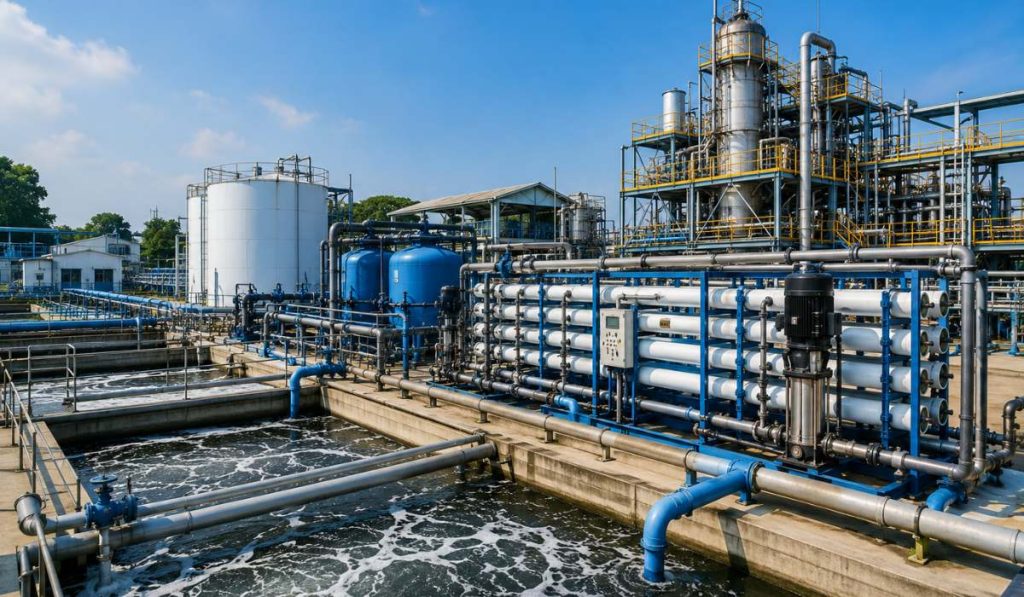
ETP with RO is the right choice when one or more of the following apply:
Your effluent TDS is too high for direct discharge. Many industrial effluents — particularly from pharmaceutical, chemical, and certain food processing operations — have TDS levels of 5,000 to 15,000 mg/L after biological treatment. Standard biological ETP cannot reduce TDS. RO brings this down to acceptable discharge levels.
You want significant water reuse without full ZLD investment. ETP+RO recovers 60 to 75 percent of your treated water as RO permeate — suitable for cooling tower makeup, utility services, and in many cases process use. This directly reduces your freshwater purchase costs.
You can still discharge the RO reject. If your CETP accepts the concentrated RO reject, or if your consent permits reject discharge at the concentrate volume and TDS, ETP+RO gives you high water recovery without the full capital cost of ZLD evaporation equipment.
You anticipate moving to ZLD in future. An ETP+RO system is the first two stages of a complete ZLD system. If you install ETP+RO now and add MEE later, you have a phased, capital-efficient path to full ZLD without throwing away your existing investment.
Practical example: A pharmaceutical formulation plant in Ranjangaon MIDC generating 80 KLD of effluent with TDS of 8,000 mg/L after biological treatment — with CETP connectivity that accepts RO reject at reduced volume — benefits from ETP+RO. Recovering 60 KLD per day as RO permeate significantly reduces freshwater costs, and the system reduces RO reject volume enough to meet CETP acceptance limits.
When ZLD Is the Right Choice
ZLD is the right engineering and compliance solution when:
ZLD is mandated for your industry in Maharashtra. The MPCB has issued ZLD mandates for textile dyeing and processing units in notified clusters, tanneries, and certain categories of chemical industries. If your industry falls in these categories, ZLD is not optional regardless of cost.
You have no discharge option. If your facility is in a water-stressed zone, near a protected water body, or in an area without CETP connectivity where discharge is not permitted, only ZLD allows your facility to operate legally.
Your effluent TDS is extremely high. RO alone cannot manage effluents above 20,000 to 30,000 mg/L TDS after biological treatment because membrane fouling and scaling make RO impractical at these concentrations without thermal concentration. ZLD with MEE is the appropriate solution.
Water recovery is a strategic priority. In regions with unreliable or expensive freshwater supply, recovering 95+ percent of effluent as process-grade water eliminates dependency on external supply. This operational resilience justifies ZLD investment even where it is not mandated.
Your effluent has no acceptable discharge destination. As environmental regulations tighten across India, many facilities find that previously permitted discharge points are progressively restricted. ZLD future-proofs your facility against these regulatory changes.
For a detailed look at ZLD system design, integration, and what makes ZLD work for Pune industries, read our ZLD strategic guide for Pune’s industrial future.
Practical example: A textile dyeing unit in a notified textile cluster in Pune district generating 200 KLD of high-colour, high-TDS effluent. ZLD is legally mandated. ETP+RO is not sufficient because reject cannot be discharged. Full ETP-RO-MEE-ATFD ZLD system is the only compliant option.
The Cost Reality — What Each System Actually Costs
Understanding cost at a realistic level prevents the most common mistake Indian industries make — choosing a system based on the lowest quote without understanding what that quote delivers.
ETP Cost Ranges
Small ETP (up to 50 KLD): ₹15 lakh to ₹40 lakh installed Medium ETP (50 to 200 KLD): ₹35 lakh to ₹90 lakh installed Large ETP (200 to 500 KLD): ₹80 lakh to ₹2 crore installed
Monthly OPEX for a 100 KLD ETP: ₹1.5 lakh to ₹4 lakh (chemicals, power, manpower, maintenance)
For a full breakdown of ETP and STP installation costs in India, read our complete STP and ETP plant cost guide.
ETP+RO Additional Cost
Adding RO to an existing or new ETP typically adds:
Small RO addition (up to 30 KLD recovery): ₹15 lakh to ₹35 lakh Medium RO addition (30 to 100 KLD recovery): ₹30 lakh to ₹70 lakh
Monthly OPEX addition for RO: ₹50,000 to ₹2 lakh (membranes, antiscalant, power, CIP chemicals)
RO permeate value: At ₹50 to ₹150 per kilolitre freshwater cost, a 100 KLD permeate recovery generates ₹1.5 lakh to ₹4.5 lakh per month in freshwater savings. For many industries, ETP+RO pays back the additional capital cost within 3 to 5 years through water savings alone.
For a complete guide to industrial RO plant costs and maintenance, read our RO plant maintenance and cost guide.
ZLD Total System Cost
ZLD system costs are significantly higher because of the thermal evaporation equipment:
50 KLD ZLD: ₹1 crore to ₹2 crore 100 KLD ZLD: ₹2 crore to ₹4 crore 250 KLD ZLD: ₹5 crore to ₹9 crore 500 KLD ZLD: ₹9 crore to ₹16 crore
Monthly OPEX for 100 KLD ZLD: ₹5 lakh to ₹10 lakh (power for MEE, chemicals, manpower, solid waste disposal)
Energy consumption drives the high OPEX of ZLD primarily because MEE systems require significant thermal energy to evaporate water from concentrate. However, companies must weigh this cost against the value of recovered water and the regulatory risk they avoid.
Common Mistakes Industries Make When Choosing Between These Systems
Choosing ETP alone to save money when ZLD is mandated. This is the most expensive mistake. A facility that installs an ETP when MPCB requires ZLD faces enforcement action, closure orders, and ultimately a forced retrofit of the entire system at penalty time pressure. The cost of this mistake exceeds the original cost of doing ZLD correctly.
Choosing ZLD when ETP alone is sufficient. Over-engineering is real. If your consent permits discharge, your TDS remains manageable, and authorities do not mandate ZLD, you allocate capital poorly by spending ₹3 crore on ZLD when an ₹80 lakh ETP can achieve full compliance.
Installing ETP+RO without planning for reject management. Many industries install RO without a clear plan for what happens to the RO reject. If your CETP will not accept it, if no discharge point exists, and if you did not plan ZLD from the start, you end up with an ETP+RO system that cannot operate its RO stage legally. This is a very common problem in Maharashtra.
Not doing a wastewater characterisation study before deciding. The right system choice depends entirely on your actual effluent quality — particularly TDS, COD, BOD, and specific contaminants. A decision made without real wastewater data is a guess that will cost you money either in enforcement action or in unnecessary capital expenditure.
For a clear understanding of why wastewater treatment plant design matters so much, read our article on why wastewater treatment plants are critical for industrial operations.
How to Make the Decision — A Practical Framework
Use this decision process to determine which system is right for your facility:
Step 1 — Check your regulatory position first.
Is ZLD mandated for your industry and location in Maharashtra? If yes, ZLD is the answer regardless of cost. Contact MPCB or a qualified environmental consultant to confirm your category. For MIDC industries specifically, check our MIDC ETP STP compliance checklist.
Step 2 — Characterise your actual wastewater.
Collect composite samples over three to five days of production. Test for BOD, COD, TSS, TDS, pH, oil and grease, heavy metals, and any industry-specific parameters. This data determines what treatment is technically required.
Step 3 — Evaluate your discharge options.
Do you have CETP connectivity? Does your CETP accept your effluent at its current or treated quality? At what TDS and volume? Is direct discharge to a water body permitted? The answers determine whether ETP, ETP+RO, or ZLD is the correct engineering response.
Step 4 — Calculate the true cost comparison.
Compare CAPEX plus five-year OPEX for each option. Factor in freshwater savings from water recovery (ETP+RO and ZLD) and the cost of non-compliance risk (regulatory fines, closure risk, remediation). The system with the lowest five-year total cost at the right compliance level is usually the correct choice.
Step 5 — Design for your anticipated future, not just today.
If authorities are likely to mandate ZLD in your sector within three to five years, designing your ETP to be ZLD-ready — by using RO-compatible pre-treatment and leaving space for MEE addition — increases upfront cost only marginally but significantly reduces future retrofit cost.
Weltreat’s Approach — Honest Assessment Before System Recommendation
At Weltreat Systems, we do not have a preferred system to sell. We have designed and commissioned ETP systems, ETP+RO systems, and full ZLD systems for industries across Pune and Maharashtra. Our approach is to conduct an honest feasibility assessment before recommending any system.
We will not recommend ZLD to a facility that does not need it. We will not recommend ETP alone to a facility that will face enforcement action without ZLD. Our recommendation is based on your actual wastewater data, your regulatory position, your discharge options, and your operational economics.
For ETP design and installation in Pune, visit our effluent treatment plant services page.
For ZLD system design and implementation, visit our Zero Liquid Discharge systems service page.
And for RO plant design and supply, visit our RO plant service page.
Frequently Asked Questions
Is ZLD mandatory for all industries in Maharashtra?
No. ZLD is currently mandatory for specific categories — textile dyeing units in notified clusters, tanneries, and certain red-category chemical industries. Regulators do not universally mandate ZLD for pharmaceutical, food, automotive, and most other industries, though they may require it as a specific consent condition depending on your location and discharge destination. Weltreat can confirm your specific regulatory position.
Can I add ZLD to my existing ETP later if I start with ETP alone?
Yes, but your original ETP design determines the ease and cost of retrofit. Engineers can upgrade ETPs designed with ZLD integration in mind — using appropriate pre-treatment chemistry and providing space for RO and MEE addition — at a significantly lower additional cost. ETPs designed without this consideration require more significant rework. If ZLD is a realistic future requirement, discuss this with your ETP designer from the start.
What happens to the RO reject in an ETP+RO system if CETP does not accept it?
This is a critical question that many industries fail to resolve before installing RO. If your CETP does not accept RO reject, and no discharge option exists, you must add evaporation equipment to handle the reject — which effectively means completing the ZLD system. Installing ETP+RO without a clear reject management plan is a design error that leads to either regulatory violation or stranded equipment.
How do I know if my current ETP is sufficient or if I need to upgrade to ETP+RO or ZLD?
The answer requires three inputs — your current treated effluent quality from laboratory testing, your current consent conditions from your MPCB CTO document, and your CETP’s acceptance criteria. If your treated effluent meets all consent conditions and CETP accepts it without issues, your ETP is currently sufficient. If you fail TDS limits, if the CETP tightens acceptance criteria, or if authorities revise your consent, you should conduct an upgrade assessment.
What is the payback period for ZLD investment?
ZLD payback periods vary widely based on freshwater costs, effluent volume, and existing water purchase costs. For industries with high freshwater costs and large effluent volumes, payback periods of 5 to 8 years are achievable through water savings alone. For industries where authorities mandate ZLD, companies treat payback calculation as secondary — they consider ZLD the cost of operating legally. And industries adopting ZLD proactively, payback must include the value of regulatory risk avoided.
Can Weltreat conduct a free assessment to determine which system is right for our facility?
Yes. Weltreat offers a free site evaluation and technical assessment for industries in Pune and Maharashtra. Our engineers visit your facility, review your current treatment setup, collect wastewater samples, review your consent conditions, and provide a clear recommendation on the most appropriate system — ETP, ETP+RO, or ZLD — with realistic cost and timeline estimates.
Also Read
- STP vs ETP: Key Differences
- Modern Water Threats Are Largely Man-Made
- Sewage Treatment Plant: Working Process
- Best Waste Water Treatment Solutions
Get a Free Assessment for Your Facility
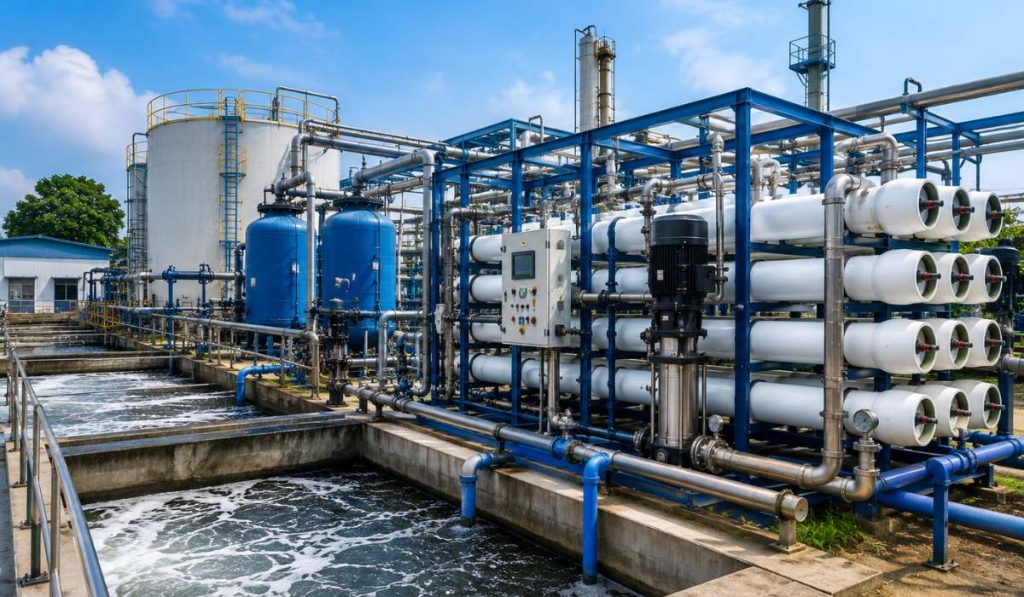
Not sure which system your facility needs? Weltreat Systems offers a free site evaluation and technical consultation — no cost, no obligation. Our engineers will visit your facility, review your wastewater characteristics and compliance requirements, and give you an honest recommendation.
Call: 020-41228334 WhatsApp: +91 9850974811 Email: info@weltreatsystems.com
Site visit arranged within 48 hours anywhere in Pune and Maharashtra.