
-
Email us at:
info@weltreatsystems.com -
Call us on:
020 - 41228334 - Download Brochure

07
May 26Every industrial facility in India that generates process wastewater has two choices — treat it properly or face the consequences. MPCB closure orders, NGT penalties, production shutdowns, and reputational damage are the real costs of ignoring effluent treatment.
But for many plant managers and facility heads, the ETP itself is a mystery — what it actually does, how it should be designed, what it costs, and how to evaluate whether theirs is working correctly.
This guide covers everything you need to know about Effluent Treatment Plants in India — from how they work to what they cost, what the regulations require, and how to avoid the most expensive mistakes industries make when installing or operating an ETP.
What Is an Effluent Treatment Plant?
An Effluent Treatment Plant is an engineered system that treats wastewater generated from industrial manufacturing and processing activities.
The purpose is to remove contaminants — suspended solids, organic matter, dissolved chemicals, oils, heavy metals, and biological agents — so that treated water either meets MPCB and CPCB discharge standards or can be safely reused within the facility.
The word “effluent” specifically refers to liquid waste generated from industrial processes — as distinct from “sewage,” which is domestic wastewater from toilets, kitchens, and bathrooms. An ETP is designed for industrial effluent.
An STP (Sewage Treatment Plant) is designed for domestic sewage. Many industrial facilities require both — an ETP for process wastewater and an STP for the domestic wastewater generated by their workforce.
Why ETPs Are Non-Negotiable for Indian Industries
Legal Requirement
Under the Water (Prevention and Control of Pollution) Act 1974 and the Environment Protection Act 1986, all industries generating effluent are required to install and operate an ETP as a condition of their MPCB Consent to Operate. There is no legal exemption for any category of industry that generates process wastewater.
Operating without a functioning ETP — or with one that does not meet consent conditions — exposes your company to:
- MPCB closure directions that can shut your facility within 24 hours
- Penalties under the Environment Protection Act
- Criminal liability for directors and officers
- NGT orders that are difficult and expensive to challenge
Operational Requirement
Beyond legal compliance, a properly functioning ETP protects your operations in three practical ways. First, it enables continuous production — facilities that bypass or underperform their ETP eventually face enforcement action that forces shutdown, often at the worst possible time. Second, it reduces freshwater costs — treated effluent can be recycled back into utility systems, reducing your dependence on expensive municipal or borewell supply. Third, it protects your facility from liability associated with groundwater contamination or surface water pollution from your site.
How an ETP Works — Stage by Stage
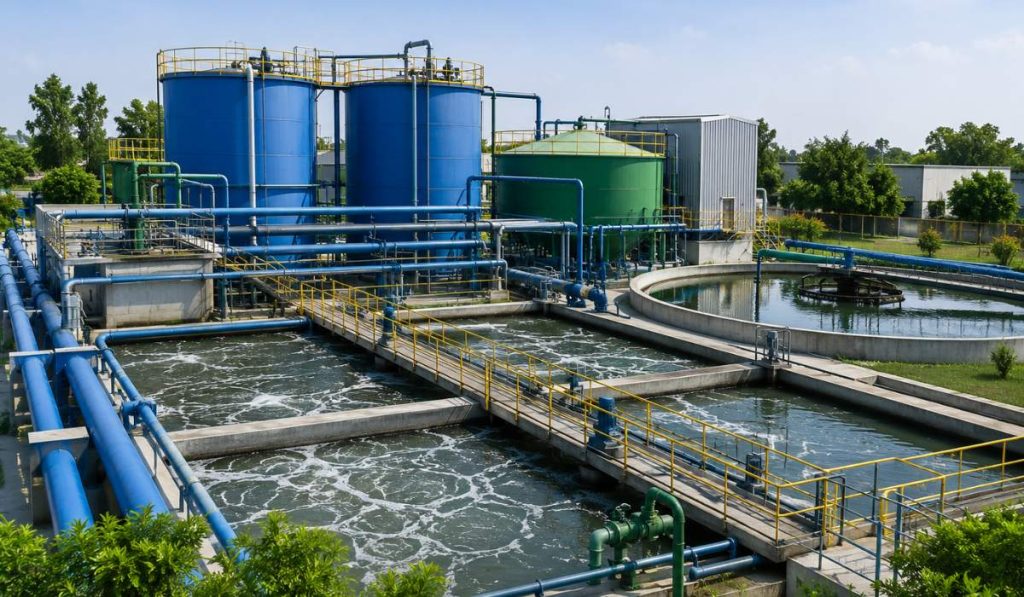
A complete industrial ETP consists of multiple treatment stages. Each stage removes specific types of contaminants. The number and type of stages depend on your effluent characteristics.
Stage 1 — Preliminary Treatment
Bar Screen: Removes large solids — rags, packaging material, process debris — that could damage downstream equipment.
Fine Screen: Removes smaller suspended particles.
Grit Chamber: Removes sand and grit from effluent streams that carry these materials.
This stage protects all downstream equipment from physical damage.
Stage 2 — Equalisation
Raw effluent from industrial processes varies significantly in flow rate, pH, temperature, and contaminant concentration throughout the day and week. The equalisation tank buffers these variations — collecting effluent and mixing it to produce a consistent feed to the treatment stages downstream.
Without equalisation, shock loads of high-strength or high-pH effluent can crash biological treatment stages, causing immediate performance failure.
Stage 3 — Primary Treatment
Coagulation: Chemicals (typically alum, ferric chloride, or polyaluminium chloride) are dosed into the effluent to destabilise suspended particles and cause them to clump together.
Flocculation: Gentle mixing allows clumps to grow into larger flocs.
Primary Clarifier or DAF (Dissolved Air Flotation): The flocculated solids are separated from the effluent by settling (clarifier) or by attaching air bubbles and floating them to the surface (DAF). DAF is preferred for effluent with oils, greases, or low-density solids.
Primary treatment typically removes 40 to 70 percent of suspended solids and 20 to 40 percent of BOD.
Stage 4 — Secondary Biological Treatment
This is the most critical stage for BOD and COD removal. Microorganisms break down dissolved organic matter in the effluent. Three technologies dominate Indian industrial ETPs:
Activated Sludge Process (ASP): Conventional biological treatment in an aeration tank where suspended microorganisms treat the effluent. Effective but requires large tank volumes and careful sludge management.
MBBR (Moving Bed Biofilm Reactor): Microorganisms grow on plastic carrier media suspended in the aeration tank. More compact than ASP, handles variable loads better, and is more resilient to upsets. Widely used in modern Indian industrial ETPs.
SBR (Sequential Batch Reactor): Biological treatment occurs in batch cycles in a single tank. Flexible, handles variable flows, and has good nutrient removal capability.
For pharmaceutical and certain chemical industries, anaerobic pre-treatment before aerobic secondary treatment is used to handle very high-strength effluent.
Stage 5 — Tertiary Treatment
Tertiary treatment polishes the biologically treated effluent to meet discharge standards or prepare it for reuse or RO feed.
Sand Filtration: Removes residual suspended solids.
Activated Carbon Adsorption: Removes colour, odour, and trace organic compounds.
UV Disinfection or Chlorination: Kills residual bacteria for industries with bacteriological discharge standards.
Reverse Osmosis: For industries requiring very low TDS in treated water for reuse, or as pre-treatment for ZLD systems.
Stage 6 — Sludge Handling
Every ETP generates sludge — the concentrated solids removed during treatment. Sludge management is a critical part of ETP operation that is often underestimated.
Sludge Thickener: Reduces sludge volume by removing water.
Filter Press or Centrifuge: Dewaters sludge to a manageable cake form.
Drying Beds: Solar drying of dewatered sludge for further volume reduction.
Disposal: Sludge must be disposed of through MPCB-authorised hazardous waste management channels. Improper sludge disposal is a significant source of MPCB violations.
For a complete guide to ETP sludge management, read our detailed article on ETP sludge treatment and disposal.
ETP Design — What Determines Your System
No two ETPs should be identical because no two industrial wastewater streams are identical. These factors determine your ETP design:
Wastewater characterisation results: The actual measured values of BOD, COD, TSS, TDS, pH, oil and grease, heavy metals, and specific contaminants in your effluent. This is the foundation of every ETP design.
Daily and hourly flow rates: Peak and average effluent volumes determine equipment sizing and equalisation tank capacity.
Discharge or reuse targets: What standards must your treated effluent meet — MPCB general standards, industry-specific standards, or internal reuse quality targets?
Site constraints: Available land, building footprint, underground or above-ground installation, civil construction feasibility.
Automation requirement: Manual operation, semi-automatic, or fully automated PLC-based systems with online monitoring.
ZLD integration: Is ZLD required now or anticipated in future? This affects ETP design choices significantly.
ETP Cost in India — Realistic Ranges
ETP costs vary significantly based on the factors above. These ranges are for complete installed and commissioned systems including civil work:
Small ETP — up to 50 KLD Suitable for: Small pharmaceutical units, food processing, light industry Total cost range: ₹15 lakh to ₹40 lakh
Medium ETP — 50 to 200 KLD Suitable for: Medium pharma, textile, food processing, chemical units Total cost range: ₹35 lakh to ₹90 lakh
Large ETP — 200 to 500 KLD Suitable for: Large manufacturing complexes, MIDC facilities, large textile units Total cost range: ₹80 lakh to ₹2 crore
Very large ETP — above 500 KLD Suitable for: Major industrial facilities, CETP (Common Effluent Treatment Plant) Total cost range: ₹1.5 crore and above
For a detailed breakdown of ETP and STP plant costs in India, read our complete cost analysis.
MPCB Compliance — What Your ETP Must Meet
Your ETP must meet the discharge standards specified in your MPCB Consent to Operate. These are based on CPCB General Standards under Schedule VI of the Environment Protection Rules, with industry-specific standards for certain sectors.
Key parameters that most industrial ETPs must meet for discharge to inland surface water:
- pH: 6.5 to 9.0
- BOD (5 days at 20°C): Not more than 30 mg/L
- COD: Not more than 250 mg/L
- TSS (Total Suspended Solids): Not more than 100 mg/L
- Oil and Grease: Not more than 10 mg/L
Pharmaceutical, textile, and certain chemical industries have additional parameters — specific heavy metals, colour, specific organic compounds — based on their production processes.
For MIDC industries, additional compliance requirements apply.
Industry-Specific ETP Requirements
Different industries have different wastewater profiles that require different treatment approaches:
Pharmaceutical ETP: High COD from APIs and solvents, potential for toxic or inhibitory compounds, strict MPCB requirements. ZLD increasingly required.
Textile ETP: High colour, high TDS, high COD, surfactants. Colour removal requires advanced coagulation and activated carbon or ozonation. ZLD mandatory in notified textile clusters.
Food and Beverage ETP: High BOD, oils and greases, variable flow. Grease traps upstream of ETP are essential. FSSAI and MPCB compliance simultaneously required.
Chemical ETP: Variable, complex effluent, potential heavy metal content. Detailed characterisation and treatability studies essential before design.
ETP vs ZLD — When Do You Need to Go Further?
An ETP treats effluent to discharge standards — treated water is released. A ZLD system takes this further — no water is discharged at all. Every drop is recovered and recycled.
ZLD is mandatory for certain industries in Maharashtra — textile dyeing in notified clusters, tanneries, and certain chemical categories. For others, it is increasingly required or economically attractive as freshwater costs rise.
Weltreat designs ETPs as the first stage of ZLD systems for industries that need to go beyond discharge compliance. Your ETP investment is protected — it becomes the pre-treatment foundation for the full ZLD system. Learn more about ZLD system cost and implementation.
Common ETP Mistakes Indian Industries Make
Designing based on assumed parameters: The most expensive mistake. ETPs designed without actual wastewater characterisation consistently underperform. Insist on real sampling and analysis before any design work.
Undersizing the equalisation tank: Industries often cut civil costs by reducing equalisation tank size. The result is shock loads crashing biological treatment and inconsistent performance. Equalisation tank should handle at least 8 to 12 hours of average flow.
Ignoring sludge management: Many ETPs are designed with inadequate sludge dewatering and disposal plans. Sludge accumulation causes secondary pollution and operational problems. Read our ETP sludge management guide.
Poor post-commissioning maintenance: A well-designed ETP that is not maintained properly will fail within 12 to 24 months. Daily monitoring, regular chemical dosing, and scheduled maintenance are non-negotiable.
Buying on price alone: The cheapest ETP tender rarely delivers the lowest total cost of ownership. Underperforming ETPs cost more in chemicals, maintenance, and eventual remediation than a correctly designed system from the start.
How to Choose an ETP Vendor
Insist on wastewater characterisation before design: Any vendor who offers a quote without visiting your site and sampling your effluent is guessing. This is the most important quality signal.
Ask for references from similar industries: An ETP designed for a food plant is not the same as one designed for a pharmaceutical plant. Ask for clients in your specific industry.
Evaluate design documentation: Request a process flow diagram, equipment list, and design calculations before committing. A vendor who cannot provide these cannot demonstrate engineering competence.
Understand post-commissioning support: Ask specifically about AMC options, operator training, and breakdown response times. Most ETP problems emerge after commissioning.
Check MPCB experience: Ask which MPCB regional offices they have obtained consent from and for which industries. Direct compliance experience matters.
Frequently Asked Questions
What is the difference between ETP and STP?
An ETP treats industrial process wastewater — effluent from manufacturing operations containing chemicals, organics, metals, and other industrial contaminants. An STP treats domestic sewage — wastewater from toilets, kitchens, and canteens. Industrial facilities often need both. The treatment processes differ significantly because the wastewater characteristics are fundamentally different.
How do I know if my existing ETP is working correctly?
Key indicators of ETP performance: treated effluent quality (BOD, COD, TSS) against your consent limits from monthly lab testing, dissolved oxygen in the aeration tank (should be 2 to 4 mg/L), MLSS in biological stage (target 2500 to 4000 mg/L), and visual observation of treated effluent clarity and colour. If any of these are outside target ranges, investigate immediately.
Can my ETP be upgraded to handle increased production capacity?
Yes, if designed with expansion in mind. Modular ETP designs can have capacity added by installing additional biological treatment modules and expanding equalisation and clarification capacity. The feasibility depends on the original design and available site space.
What happens if my ETP fails during MPCB inspection?
If MPCB inspectors find your ETP not functioning or treated effluent not meeting consent standards, they can issue a Show Cause Notice, followed by a Closure Direction if the response is unsatisfactory. Immediate action — stopping discharge, fixing the problem, and submitting a compliance report — is the correct response.
How often should ETP treated water be tested?
For MPCB compliance, monthly self-monitoring with results submitted quarterly is typically required. For your own operational control, weekly testing of key parameters (BOD, COD, pH, TSS) is recommended. Daily in-house measurement of pH and turbidity as a minimum.
Ready to Install or Upgrade Your ETP?
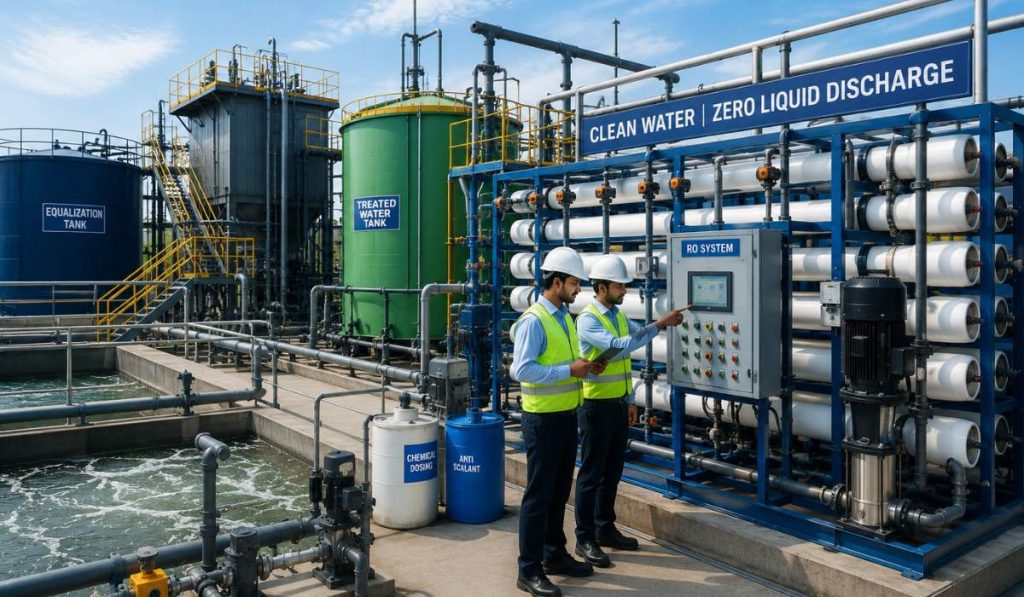
Weltreat Systems offers a free site evaluation for industries across Pune and Maharashtra. Our engineers will visit your facility, collect wastewater samples, review your compliance requirements, and provide a detailed technical and commercial proposal.
Site visit arranged within 48 hours anywhere in Pune and Maharashtra.