
-
Email us at:
info@weltreatsystems.com -
Call us on:
020 - 41228334 - Download Brochure

19
Jun 26Membrane filtration technology has become central to industrial water and wastewater treatment in India. But three membrane technologies — Reverse Osmosis, Ultrafiltration, and Nanofiltration — are frequently confused, often quoted interchangeably by vendors, and sometimes specified incorrectly for applications they were never designed to handle.
Choosing the wrong membrane technology leads to either overspending on capability you do not need, or underperforming systems that fail to deliver the water quality your process demands. This guide explains exactly what separates RO, UF, and NF, and how to choose correctly for your specific application.
| Feature | UF | NF | RO |
|---|---|---|---|
| Removes Suspended Solids | Yes | Yes | Yes |
| Removes Bacteria & Viruses | Yes | Yes | Yes |
| Removes Hardness | No | Yes | Yes |
| Removes TDS | No | Partial | Yes |
| Operating Pressure | Low | Medium | High |
| Energy Consumption | Low | Medium | High |
| Best For | Filtration | Softening | Desalination |
The Core Difference — What Each Membrane Actually Rejects
All three technologies are pressure-driven membrane processes — water is forced through a membrane under pressure, and the membrane retains contaminants based on size and charge. The difference lies in pore size, which determines what each membrane can and cannot remove.
Ultrafiltration (UF) has the largest membrane pore size among the three — typically 0.01 to 0.1 microns. UF removes suspended solids, bacteria, viruses, colloids, and large organic molecules. It does not remove dissolved salts or ions. Operating pressure is low — typically 1 to 3 bar.
Nanofiltration (NF) sits between UF and RO. Pore size is smaller than UF, in the nanometre range. NF removes larger organic molecules, most bacteria and viruses, and a significant portion of dissolved ions — particularly divalent ions like calcium and magnesium (hardness). It allows some monovalent ions (sodium, chloride) to pass through to a greater extent than RO does. Operating pressure is moderate — typically 5 to 15 bar.
Reverse Osmosis (RO) has the smallest effective pore size of the three. RO removes nearly all dissolved salts and ions — both monovalent and divalent — along with all the contaminants UF and NF remove. Operating pressure is the highest of the three — typically 10 to 70 bar depending on feed water TDS.
For a complete understanding of how RO works stage by stage, read our how industrial RO plant works guide.
Side-by-Side Technical Comparison
| Factor | UF | NF | RO |
|---|---|---|---|
| Pore size | 0.01 to 0.1 micron | 0.001 to 0.01 micron | Less than 0.001 micron |
| Operating pressure | 1 to 3 bar | 5 to 15 bar | 10 to 70 bar |
| Suspended solids removal | Excellent | Excellent | Excellent |
| Bacteria and virus removal | Excellent | Excellent | Excellent |
| Hardness (Ca, Mg) removal | None | Good to excellent | Excellent |
| Monovalent salt removal (Na, Cl) | None | Partial (40-70%) | Excellent (95-99%) |
| TDS reduction | None | Moderate | High |
| Organic compound removal | Large molecules only | Moderate to large | Most organics |
| Energy consumption | Lowest | Moderate | Highest |
| Membrane cost | Lowest | Moderate | Moderate to high |
| Typical recovery rate | 90 to 98% | 75 to 90% | 50 to 85% |
Ultrafiltration — When It Is the Right Choice
UF is the correct technology when your objective is removing particulates, bacteria, and turbidity — without needing to reduce dissolved salts.
Choose UF when:
You need RO pre-treatment. UF is the most common and effective pre-treatment for RO systems, reducing SDI (Silt Density Index) below 3 and protecting RO membranes from particulate and biological fouling. This single application accounts for the majority of UF installations in Indian industry.
You need bacteria and virus removal without TDS reduction. Drinking water applications where source water TDS is already acceptable but microbiological safety is required are well suited to standalone UF.
You are treating wastewater for non-potable reuse. ETP or STP effluent intended for cooling tower makeup, gardening, or toilet flushing often only needs UF-level treatment — bacteria and suspended solids removed — without the cost of RO-level TDS reduction.
You want low energy consumption. UF operates at the lowest pressure of the three technologies, making it the most energy-efficient choice when its treatment level meets your requirement.
Practical example: A textile processing unit needs to recycle treated ETP effluent for use as wash water in a non-critical process step where colour and bacteria matter but TDS is not a concern. Standalone UF treatment, without RO, meets this requirement at a fraction of the capital and operating cost of RO.
Nanofiltration — When It Is the Right Choice
NF occupies a specific niche — applications where hardness or specific larger organic contaminants must be removed, but full RO-level TDS reduction is unnecessary or undesirable.
Choose NF when:
You need selective hardness removal without full desalination. Industries that need to soften water — remove calcium and magnesium to prevent scaling — but want to retain some dissolved minerals (for taste, for specific process chemistry, or to reduce waste brine volume) benefit from NF over full RO.
You are treating water with high natural organic matter and colour. NF effectively removes humic substances, colour-causing organics, and pesticide residues that pass through UF but do not require RO’s complete ion rejection.
You want to reduce water hardness for boiler feed without the energy cost of RO. Many industrial boiler feed applications need hardness removed (to prevent scale) but do not require the very low TDS that RO produces, particularly when the boiler operates at moderate pressure.
You need to concentrate specific organic compounds while passing salts through. Certain specialty chemical and food processing applications use NF specifically for this selective separation capability.
Practical example: A food processing facility needs to reduce hardness in process water to prevent scale formation in heat exchangers, while keeping some dissolved minerals for product taste consistency. NF achieves the required hardness reduction at lower energy cost than RO, without over-purifying the water.
Reverse Osmosis — When It Is the Right Choice
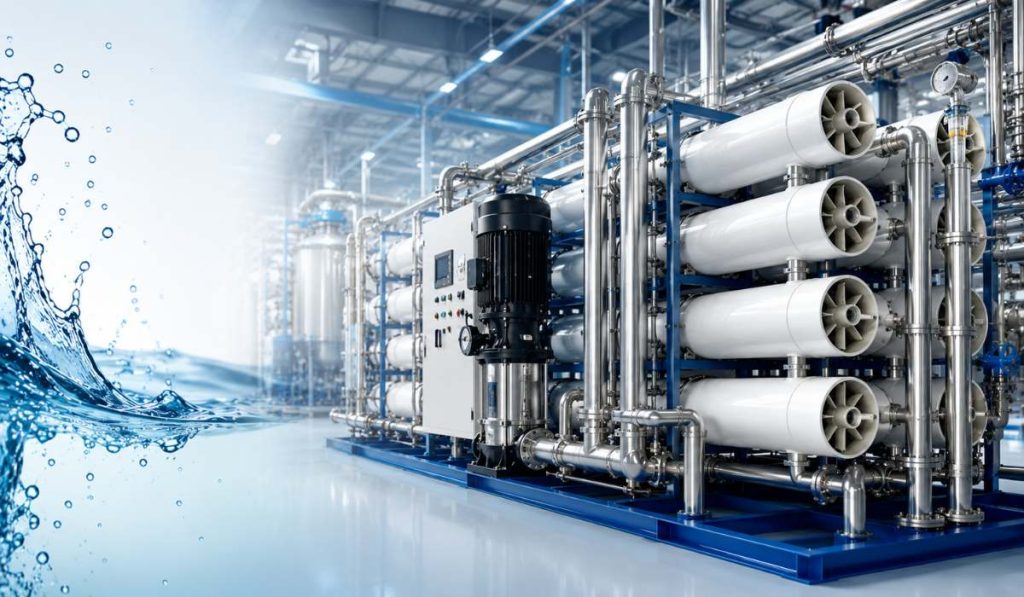
RO is the correct choice whenever your application requires significant TDS reduction — removing both monovalent and divalent dissolved salts comprehensively.
Choose RO when:
You need low-TDS process water for pharmaceutical, electronics, or specialty chemical manufacturing. These industries require feed water with TDS often below 10 mg/L for further processing into purified water grades. Only RO (often followed by mixed bed deionisation) achieves this.
You need boiler feed water for high-pressure boilers. High-pressure boiler systems require very low TDS feed water to prevent scaling and carryover. RO is the standard pre-treatment for demineralisation plants feeding these boilers.
Your effluent must meet strict TDS discharge limits. Where CETP or direct discharge consent specifies TDS limits that biological treatment alone cannot achieve, RO is necessary to bring treated effluent into compliance.
You are recovering water for high-purity reuse or as the first stage of a ZLD system. RO is the standard technology for recovering 60 to 85 percent of treated effluent as high-quality permeate, whether for direct reuse or as pre-treatment to MEE in a ZLD system.
For a detailed cost and process breakdown of industrial RO systems, read our industrial RO plant complete guide.
Practical example: A pharmaceutical formulation plant requires process water with TDS below 10 mg/L for tablet coating operations. Only RO, typically followed by polishing with mixed bed deionisation, achieves this water quality consistently.
| Industry | Recommended Technology |
|---|---|
| Pharmaceutical Manufacturing | RO |
| Food & Beverage Processing | NF / RO |
| Textile Industry | UF + RO |
| Power Plants | RO |
| Chemical Manufacturing | NF + RO |
| Automotive Industry | UF + RO |
| Municipal Water Treatment | UF |
| Wastewater Recycling Plants | UF + RO |
Cost Comparison — CAPEX and OPEX
These ranges are for a 50 KLD capacity system, installed and commissioned, for typical Indian industrial feed water conditions.
UF System — 50 KLD
Capital cost: ₹8 lakh to ₹18 lakh
Monthly OPEX: ₹15,000 to ₹35,000
Membrane replacement: Every 5 to 8 years
NF System — 50 KLD
Capital cost: ₹15 lakh to ₹30 lakh
Monthly OPEX: ₹30,000 to ₹60,000
Membrane replacement: Every 3 to 6 years
RO System — 50 KLD
Capital cost: ₹20 lakh to ₹40 lakh
Monthly OPEX: ₹40,000 to ₹90,000
Membrane replacement: Every 3 to 5 years
The cost progression reflects increasing pressure requirements, more sophisticated pre-treatment needs, and higher membrane replacement frequency as you move from UF to NF to RO.
For a comparison of how RO fits into broader treatment system choices including ZLD, read our ZLD vs ETP vs ETP+RO decision guide.
Combining Technologies — Multi-Stage Membrane Trains
In practice, many industrial systems combine these technologies in series rather than choosing one in isolation:
UF followed by RO is the most common configuration in Indian industrial water treatment. UF removes particulates and biological contaminants, protecting the RO membranes from fouling and significantly extending RO membrane life. This is standard practice for any RO system treating surface water, borewell water with variable quality, or treated effluent.
NF followed by RO is used when feed water has very high hardness that would otherwise scale RO membranes rapidly even with antiscalant. NF pre-softens the water, reducing the antiscalant burden on the downstream RO stage.
UF, then NF, then RO is used in the most demanding applications — typically high-TDS industrial effluent being prepared for ZLD, where maximum protection of expensive downstream RO and evaporation equipment justifies the additional pre-treatment stage.
For industries integrating membrane treatment into a complete ETP system, read our effluent treatment plant complete guide.
Common Mistakes When Selecting Membrane Technology
Specifying RO when UF would suffice. If your application only needs bacteria, virus, and suspended solids removal — for example, treated effluent reuse for gardening or cooling tower makeup — specifying RO wastes capital and operating cost on TDS reduction you do not need.
Specifying UF when RO is actually required. The opposite mistake is equally common. If your true requirement is dissolved salt reduction — for boiler feed, for pharmaceutical process water, for strict discharge TDS compliance — UF alone will never achieve this regardless of how it is operated. This is a fundamental technology mismatch, not an operational problem.
Not protecting RO membranes with adequate pre-treatment. Installing RO directly on raw or poorly pre-treated water without UF or equivalent pre-treatment leads to rapid membrane fouling and dramatically shortened membrane life. The cost saved by skipping UF pre-treatment is lost many times over in accelerated RO membrane replacement.
Choosing NF without understanding its selective rejection. NF’s partial rejection of monovalent salts means treated water still has measurable TDS — sometimes higher than expected by buyers who assume any membrane system produces RO-quality water. Set correct expectations before specifying NF.
Ignoring feed water characterisation. As with all treatment technology decisions, the correct choice depends on actual feed water quality data — TDS, hardness, organic content, biological load. A technology choice made without this data is a guess.
Choosing the Right Membrane Technology
Selecting the right membrane filtration technology depends on feed water quality, treatment objectives, operating costs, and regulatory requirements. While UF is ideal for removing suspended solids and microorganisms, NF is best for hardness reduction and selective contaminant removal. RO remains the preferred solution when comprehensive TDS reduction and high-purity water are required. A detailed water analysis is essential before selecting any membrane-based treatment system.
How Weltreat Selects Membrane Technology for Your Application
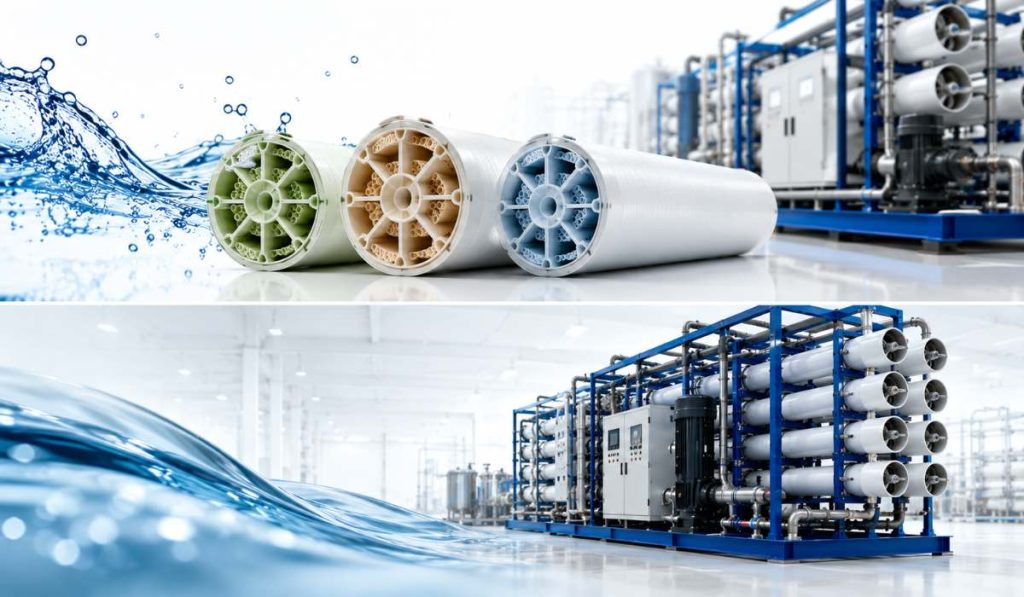
At Weltreat Systems, every membrane system recommendation begins with feed water characterisation and a clear understanding of your treated water quality target — whether for process use, discharge compliance, or reuse. We design UF, NF, and RO systems, and frequently combine them in multi-stage configurations engineered specifically for your application.
For RO plant design, supply, and installation in Pune and Maharashtra, visit our RO plant service page.
For complete water and wastewater treatment solutions combining membrane technologies with biological and chemical treatment, visit our effluent treatment plant services.
Frequently Asked Questions
Can UF remove TDS from water?
No. UF membranes have pore sizes too large to reject dissolved salts and ions. UF removes suspended solids, bacteria, viruses, and large organic molecules, but dissolved salts pass through freely. For TDS reduction, NF or RO is required.
What is the main advantage of NF over RO?
NF operates at lower pressure than RO, consuming less energy, while still removing hardness and larger organic contaminants effectively. NF is the right choice when full desalination is not required and selective removal of hardness or specific organics is the actual objective.
Can I use UF water directly for drinking?
UF removes bacteria and viruses effectively, making it suitable for microbiological safety in many drinking water applications, provided the source water TDS and chemical quality are already acceptable. UF does not remove dissolved chemical contaminants, heavy metals, or excess TDS — these require RO or NF in addition to UF.
Why is UF almost always installed before RO in industrial systems?
UF protects RO membranes from fouling caused by suspended solids, colloids, and biological growth. Without UF or equivalent pre-treatment, RO membranes foul rapidly, requiring frequent and expensive cleaning or premature replacement. UF pre-treatment is standard practice and significantly extends RO membrane operating life.
Which membrane technology is best for industrial wastewater recycling?
For industrial wastewater recycling, UF and RO are commonly used together. UF removes suspended solids and biological contaminants, while RO reduces dissolved salts and enables high-quality water recovery for reuse in industrial processes.
How do I know which membrane technology my application actually needs?
The decision depends on your feed water quality and your treated water target. If you need to remove only particulates and microorganisms, UF is sufficient. If you need to remove hardness or specific organics while retaining some dissolved minerals, NF is appropriate. If you need comprehensive TDS reduction for process water, boiler feed, or strict discharge compliance, RO is necessary. Weltreat conducts feed water analysis to confirm the correct technology for your specific application.
Also Read
- Industrial RO Plant Complete Guide India
- How Industrial RO Plant Works — Stage by Stage Guide
- RO Plant Maintenance Schedule — 12-Month Guide
- ZLD vs ETP vs ETP+RO — Which System Does Your Industry Need
- Effluent Treatment Plant Complete Guide India
Get a Free Membrane Technology Assessment
Not sure whether your application needs UF, NF, or RO? Weltreat Systems offers free feed water analysis and technology recommendation for industries across Pune and Maharashtra.