
-
Email us at:
info@weltreatsystems.com -
Call us on:
020 - 41228334 - Download Brochure
14
Nov 25Industrial Effluent Treatment Plant for Textile Industry in India: A Technology-Focused Breakdown
- November 14, 2025
Industrial Effluent Treatment – The textile sector in India consumes massive volumes of water—mainly in dyeing, washing, bleaching, and printing. Because of this, the industry also generates some of the most complex wastewater streams in the country: high COD, intense colours, residual dyes, surfactants, salts, and occasionally heavy metals.
For textile manufacturers, the pressure from the Pollution Control Board, rising freshwater costs, and sustainability demands have made a reliable industrial effluent treatment plant (ETP) non-negotiable. And today, the conversation is no longer just “install an ETP”—it’s about the right treatment technology that can consistently meet norms and enable maximum water reuse.
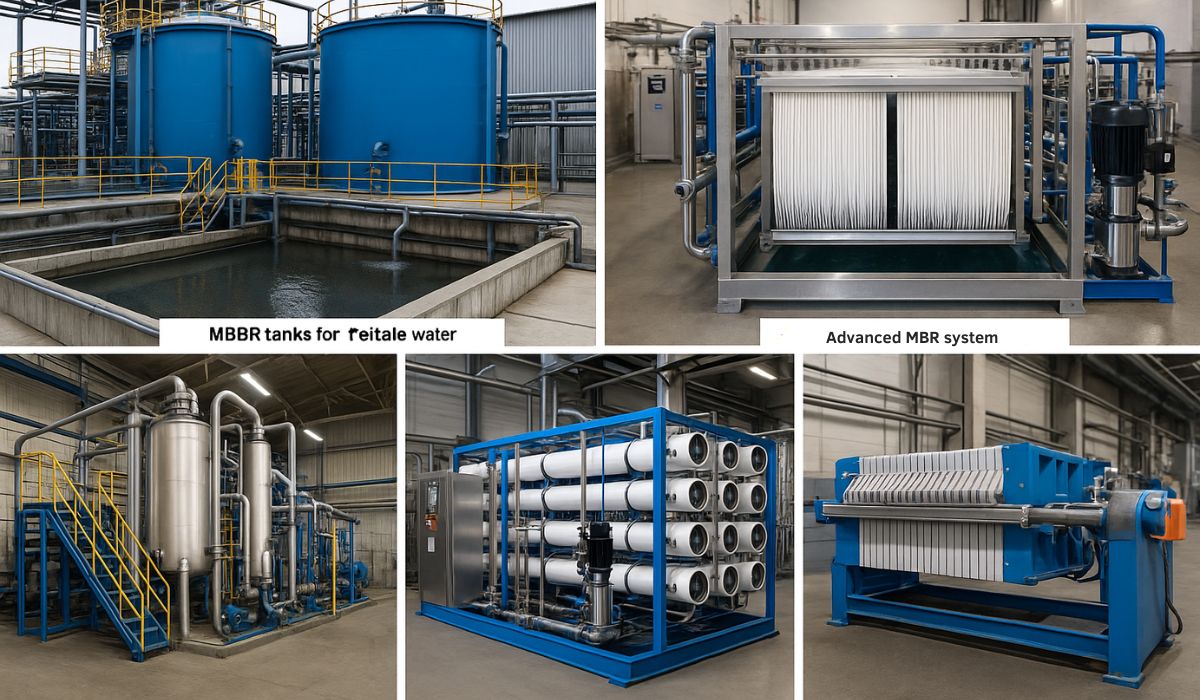
This article breaks down the major technologies used in modern textile ETPs in India—MBBR, MBR, RO, evaporator, ZLD systems, clarifiers, sludge treatment—and explains when they make sense, how they work, and what performance you can realistically expect.
Why Textile Effluent Is Hard to Treat
Before selecting any technology, decision-makers should understand the wastewater characteristics typical in dyeing and printing units:
- High COD (2,000–8,000+ mg/L)
- Persistent color from dyes (reactive, direct, vat, disperse)
- High TDS due to salt, sodium sulphate, soda ash
- Oil, grease, and surfactants
- pH fluctuation from highly acidic to highly alkaline
- Suspended solids and undissolved dyes
The challenge is achieving consistent compliance, especially colour, COD, and TDS reduction—without increasing operating burden.
That’s where the right mix of biological, membrane, and thermal technologies becomes critical.
Primary Treatment Technologies for Textile ETP
1. Clarifiers and Primary Settling (Essential First Step)
A textile ETP typically starts with primary treatment, which removes solid particles, lint, fibres, and part of the suspended load.
A well-designed clarifier helps:
- Improve downstream MBBR/MBR performance
- Reduce shock loads
- Minimize sludge accumulation later
- Lower chemical consumption
Although simple, a good clarifier layout often determines the success of the entire ETP.
Biological Treatment Technologies
Textile wastewater has high biodegradable load. Biological treatment is where major COD/BOD reduction happens. Two technologies dominate India’s textile sector today: MBBR and MBR. Both have strengths—what matters is choosing the right one.
2. MBBR (Moving Bed Biofilm Reactor) – Reliable for High-Load Textile Effluent
Why it works for textile effluent:
MBBR uses plastic media on which microorganisms grow as a biofilm. This gives high biological activity, making it ideal for variable and high-strength loads.
Typical results in textile ETPs:
- COD reduction: 85–90% after biological
- BOD reduction: 90–98%
- Handles fluctuating dye loads better than conventional ASP
- Lower operator dependency
- Lower sludge generation
When MBBR is the right choice:
- Textile units with high and variable load
- ETPs needing robustness rather than ultra-polished output
- Plants that later integrate RO
It’s widely used because of its stability and lower running complexity.
3. MBR (Membrane Bio-Reactor) – For High-Quality Treated Water & Reuse
If the requirement is reuse, recycling, or discharge with extremely low turbidity, MBR technology is the preferred choice.
MBR integrates biological treatment + membrane filtration (hollow fibre or flat sheet).
Performance benchmarks:
- Ultra-low turbidity → suitable for RO feed
- Consistent quality even during load spikes
- Very low TSS
- Water reuse potential → 70–90% when combined with RO
- Produces superior permeate compared to MBBR
When MBR is the right choice:
- Plants targeting water recycling
- Units intending to move towards ZLD
- Factories with limited space (MBR has a compact footprint)
For textile dyeing units under pressure to minimize freshwater dependency, MBR has become the preferred biological treatment approach.
Advanced Polishing & Water Recovery Systems
After biological treatment, textile units must remove dissolved solids, colour traces, and salts—especially where reuse or ZLD is mandatory.
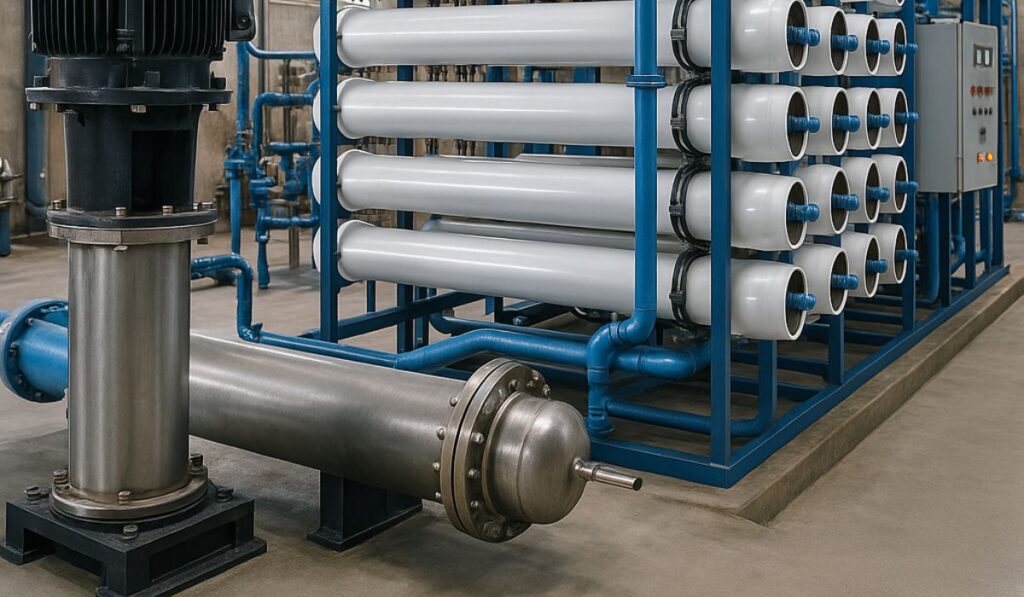
4. RO (Reverse Osmosis) – To Remove TDS & Enable Maximum Reuse
RO is essential when textile units intend to reduce freshwater intake. Biological treatment does not remove TDS; RO does.
RO performance for textile ETP:
- TDS of permeate: 100–200 mg/L typical
- Removes colour to near-zero
- Removes dissolved salts and fine contaminants
- Allows 50–85% recovery depending on feed quality
When RO is necessary:
- Any unit aiming for reuse
- Units with discharge norms requiring low TDS
- ZLD-based facilities (as RO is the heart of ZLD)
RO is only as good as its pre-treatment. A weak upstream design reduces recovery and increases fouling.
5. Multi-Effect Evaporator (MEE) & ATFD – For Concentrate Management
As India’s regulatory pressure increases, many textile industries—especially in Gujarat, Tamil Nadu, Rajasthan—are pushed toward Zero Liquid Discharge (ZLD).
RO concentrate contains very high TDS and colour. This is where thermal technologies come in:
MEE (Multi-Effect Evaporator):
- Evaporates water from RO reject
- Produces condensate suitable for reuse after polishing
- Reduces liquid volume drastically
ATFD (Agitated Thin Film Dryer):
- Converts final sludge into dry solid
- Eliminates liquid waste completely
Typical ZLD recovery:
90–95% total water recovery when RO + MEE + ATFD are integrated.
ZLD Systems for Textile Industry in India
6. ZLD (Zero Liquid Discharge) – For Stringent Textile Clusters
ZLD is no longer an optional upgrade. PCB norms in several Indian states require textile units—especially clustered units—to implement near-zero discharge practices.
A typical ZLD workflow for textiles includes:
- Primary + Biological treatment (MBBR / MBR)
- Ultrafiltration (if MBBR is used)
- RO for water recovery
- MEE for concentrate reduction
- ATFD for final salt drying
Advantages for textile units:
- Maximum water reuse
- Virtually no liquid discharge
- PCB compliance even in strict zones
- Long-term sustainability and licence security
ZLD is capital-intensive but protects factories from shutdown risks.
Sludge Dewatering & Solid Handling
7. Filter Press / Centrifuge for Textile Sludge
Textile effluent produces sludge containing:
- Dyes
- Chemical residues
- Biological solids
Efficient sludge management ensures smooth daily operation.
Technologies used:
- Filter press (most common)
- Decanter centrifuge (for continuous operation)
Proper sludge dewatering reduces handling cost and prevents downstream clogging issues.
Putting It All Together: Modern ETP Architecture for Textile Units
A semantically complete industrial effluent treatment plant for textile industry in India typically includes:
- Screening & equalization
- Primary treatment (clarifier)
- Biological treatment
- MBBR or
- MBR (for reuse/ZLD-ready plants)
- Secondary clarification / membrane separation
- RO for TDS & colour removal
- MEE + ATFD (only for ZLD facilities)
- Sludge handling (filter press / centrifuge)
- Final water reuse or discharge
The exact sequence depends on:
- Wastewater load
- Reuse requirements
- Space availability
- Local PCB norms
- Budget
- Long-term O&M strategy
Expected Performance Benchmarks (Realistic & India-Specific)
To maintain technical credibility, here are industry-standard expectations:
- COD reduction (biological): 85–95%
- BOD reduction: 90–98%
- MBR permeate turbidity: <1 NTU
- RO permeate TDS: 100–200 mg/L
- Water reuse potential: 70–90% (MBR + RO)
- ZLD recovery: 90–95%
These numbers align with what textile units across India achieve with optimized treatment systems.
Why Technology Selection Matters More Than Ever
Textile factories are under pressure from:
- State PCBs
- High water costs
- Global client sustainability audits
- Scarcity of freshwater in industrial belts
- Rising sludge disposal costs
Selecting the right ETP technology is no longer only about compliance—it’s about operational reliability, reduced downtime, and lower long-term risk.
A well-engineered system combining MBBR/MBR + RO + ZLD technologies ensures:
- Stable treated water quality
- Lower chemical consumption
- Fewer fouling issues
- Maximum water recovery
- PCB compliance without constant firefighting
Conclusion

The textile industry in India is moving rapidly toward high-efficiency, low-waste, reuse-optimized ETP systems. Whether a factory chooses MBBR, MBR, RO-based reuse, or full ZLD depends on its load profile, compliance needs, and business goals.
What matters is not just installing an ETP—but investing in the right combination of technologies that deliver stable output, withstand dye load fluctuations, and ensure long-term regulatory security.
FAQs – Effluent Treatment
These are based on real search behavior in India. No soft questions — only high-intent, technical queries people actually ask.
1. What is the best effluent treatment system for textile dyeing units in India?
Modern textile dyeing units in India prefer MBR-based ETPs because they deliver highly stable COD/BOD reduction and produce treated water suitable for RO. For units with higher fluctuation, MBBR works well before membrane polishing. The final selection depends on load, TDS level, and reuse requirements.
2. How much COD and BOD reduction can a textile ETP achieve?
A well-engineered textile ETP can achieve 85–95% COD reduction and 90–98% BOD reduction using biological treatment like MBBR or MBR, followed by membrane polishing.
3. Why does textile wastewater need RO treatment?
Biological treatment reduces COD and colour but does not remove salts or TDS. Textile effluent contains large amounts of sodium, chlorides, sulfates, and dissolved dyes. RO removes TDS, produces permeate with 100–200 mg/L, and is essential for water recycling or ZLD.
4. What is the role of MEE and ATFD in textile ETP?
In ZLD systems, MEE evaporates RO reject to reduce volume and recover water. ATFD dries the final concentrate into solid powder. This ensures zero liquid discharge and full compliance in strict textile clusters.
5. How much water can textile units recycle using MBR + RO?
Textile dyeing and printing units can usually recycle 70–90% of wastewater with an MBR + RO treatment train, depending on feed TDS and operating stability.
6. What makes textile wastewater difficult to treat?
High colour, surfactants, dyes, fluctuating pH, and extremely high TDS make textile effluent tough to treat. This is why textile ETPs require a combination of biological, membrane, and thermal technologies to achieve consistent output.
7. Is ZLD mandatory for textile industries in India?
Some states—like Tamil Nadu, Gujarat, and parts of Rajasthan—enforce strict near-zero discharge norms for textile dyeing/processing clusters. Others require high-quality secondary/tertiary treatment or partial reuse. Compliance depends on state PCB guidelines.