
-
Email us at:
info@weltreatsystems.com -
Call us on:
020 - 41228334 - Download Brochure

02
Dec 25Best Waste Water Treatment Solutions for Industries in Pune
- December 2, 2025
Pune has become one of India’s fastest-growing industrial zones, with rapidly expanding manufacturing clusters such as Chakan, Talegaon, Ranjangaon, Pimpri-Chinchwad MIDC, Hinjewadi, Hadapsar, and Kharadi. These zones host thousands of industrial, commercial and institutional establishments — including automotive and engineering plants, pharmaceutical and chemical facilities, food & beverage processing units, textile and dyeing mills, hospitals, educational institutions, IT parks, residential townships, logistics hubs and commercial complexes.
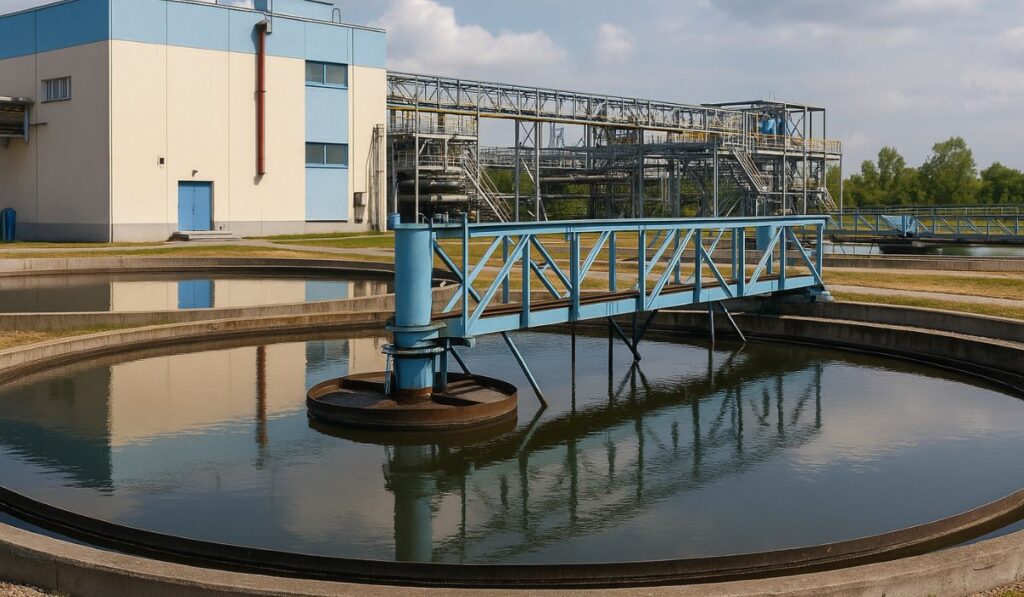
This rapid development has resulted in a steep rise in wastewater generation. Effluent and sewage loads have increased significantly, while regulatory norms, water scarcity and sustainability pressures have tightened. In this environment, wastewater treatment is no longer an optional infrastructure component — it is a mission-critical requirement that directly affects compliance, operational continuity, brand reputation, cost control and long-term sustainability.
This guide breaks down the best waste water treatment solutions for industries in Pune, explaining technologies, regulatory expectations, engineering parameters and implementation strategies in practical detail to support informed industrial decision-making.
Why Wastewater Treatment Is Critical for Industries in Pune
1. Strict Regulatory Obligations from MPCB / CPCB
Environmental regulations governing industrial discharge have become significantly stricter. MPCB has intensified monitoring for:
- COD and BOD levels
- TSS, TDS and turbidity
- Heavy metals and toxic compounds
- pH control
- Nutrient removal (NH3-N, TN, TP)
- Colour removal, foaming and odour standards
Non-compliance leads to:
| Action | Impact |
|---|---|
| Show-cause notice | Immediate risk to operations |
| Heavy penalties / recurring fines | Financial loss |
| Closure directive / production stop | Major disruption |
| Criminal liability for management | Legal risk |
| Loss of customer trust & certifications | Business impact |
Industries dependent on export markets face additional risk: audit failure from global customers and sustainability systems (ISO 14001, ESG, GRI, ZDHC, GreenCo, LEED etc.)
2. Escalating Water Scarcity and Supply Instability
Industrial clusters around Pune frequently rely on tanker water, borewells and uncertain municipal supply. Water availability affects production reliability, and tanker pricing continues to climb every year.
| Issue | Business Outcome |
|---|---|
| Unpredictable water availability | Production shutdown risk |
| Tanker cost fluctuation | OPEX instability |
| Borewell depletion | Worsening scarcity |
| High dependency | Limited scale & growth |
Investment in recycling and reuse systems significantly reduces risk and creates long-term economic advantage.
3. ESG, Sustainability & Client Audits
Multinational OEMs and large global supply chains increasingly demand:
- Water positivity & circular reuse models
- Reduced freshwater consumption
- Wastewater recycling performance
- Transparent ESG reporting
Plants lacking compliant wastewater treatment risk being removed from approved vendors list.
4. Reputation & Social License to Operate
Industrial pollution now attracts immediate social backlash and media coverage. A single failure can damage brand equity built over years.
5. Profitability & Lifecycle Economics
Weak wastewater plants cause:
- Excess power & chemical usage
- Rising O&M costs
- Frequent breakdowns
- Poor reuse capability
- Limited scalability
A well-engineered system optimizes CAPEX + OPEX + performance reliability, delivering practical ROI.
Types of Wastewater Generated in Pune Industries
| Type | Sources | Characteristics | Required System |
|---|---|---|---|
| Industrial Effluent | Chemicals, pharma, textile, plating, dyes, automotive, F&B | High COD/BOD, oils, metals, colour, solvents | ETP + biological + polishing + RO (optional) |
| Sewage / Domestic Wastewater | Toilets, canteens, hostels, offices, hospitals | Organic load, nutrients, pathogens | STP (MBBR/SBR/MBR) |
| Utility Reject / High-TDS Streams | RO reject, cooling tower & boiler blowdown | High salts, scaling elements, silica | RO, NF, evaporators, ZLD |
| Sludge | By-product of treatment | Solid / semi-solid waste | Dewatering + responsible disposal |
Industry-Wise Wastewater Characteristics
| Industry | Special Treatment Needs |
|---|---|
| Pharmaceuticals / Chemicals | Toxic organic loads, solvents, high TDS, complex compounds, AOX removal |
| Textile & Dyeing | Colour removal, surfactants, COD reduction |
| Food & Beverage | High organic loads, fat/oil/grease control |
| Automotive / Metal finishing | Heavy metals, oils & grease, emulsions |
| Dairy | High COD/BOD, foaming control |
| Hospitals | Pathogens, disinfectants, antibiotics |
| Institutions / Townships | Stable biological treatment + nutrient removal |
Regulatory Discharge Norms (Typical Permissible Limits)
| Parameter | MPCB/CPCB Typical Standard |
|---|---|
| pH | 6.5 – 8.5 |
| BOD | < 10–30 mg/L (depending discharge category) |
| COD | < 100–250 mg/L |
| TSS | < 20 mg/L |
| Oil & Grease | < 10 mg/L |
| Total Nitrogen | < 10–20 mg/L |
| Phosphates | < 1 mg/L |
| Colour | Acceptable / Colourless |
| Faecal Coliform | < 100 MPN/100ml |
Plants failing to meet these norms face escalating penalties and enforcement.
Best Waste Water Treatment Solutions for Industries in Pune
1. Effluent Treatment Plant (ETP)
ETPs remove complex pollutants and toxic contaminants from industrial effluent. Modern plants integrate chemical, biological and membrane processes for optimal treatment and reuse.
ETP Engineering Design Considerations
| Parameter | Typical Value |
|---|---|
| MLSS | 2500–4500 mg/L |
| HRT (Hydraulic Retention Time) | 6–20 hours depending load |
| SRT (Sludge Retention Time) | 10–25 days |
| F/M Ratio | 0.15–0.35 |
| DO (Dissolved Oxygen) | 2–4 mg/L |
| Organic Load Reduction | 85–95% through biological treatment |
ETP Treatment Train
- Screening, oil & grease removal, equalization
- pH adjustment, coagulation & flocculation
- Clarification (primary settling)
- Biological treatment (aerobic MBBR / SBR / extended aeration)
- Secondary clarification
- Filtration + activated carbon
- Membrane filtration (UF/RO) if reuse required
- Sludge handling (filter press / centrifuge / decanter)
When ETP Is Essential
- Pharma & specialty chemical facilities
- Surface coating, plating & metal finishing
- Textile & dyeing units
- Food & beverage processing
2. Sewage Treatment Plant (STP)
STPs treat domestic wastewater from industrial campuses, institutions, hotels and real estate developments, enabling reuse and compliance.
Technology Comparison
| Parameter | MBBR | SBR | MBR |
|---|---|---|---|
| Output Quality | Good | Very High | Ultra-High |
| Reuse Capability | Moderate | High | Excellent |
| Space | Medium | Low | Very Low |
| O&M | Simple | Moderate | Skilled |
| Treated Water Turbidity | < 10 NTU | < 5 NTU | < 1 NTU |
| Best Use Case | Societies, hotels, small-medium loads | Townships, industrial campuses | Reuse-driven industries |
Why MBR Is Growing Rapidly
- Smaller footprint
- Near-zero suspended solids
- Ideal for RO feed
- Supports strict discharge and reuse strategy
Membrane flux: 12–22 LMH | MLSS: 8000–12000 mg/L
3. Water Recycling & Reuse Systems (UF + RO)
Recycling converts treated water into a reliable, high-quality source that reduces dependence on external supply.
Engineering Focus
| Parameter | Typical Value |
|---|---|
| RO Recovery | 65–80% |
| RO Pressure | 12–20 bar (industrial) |
| Conductivity Output | 10–100 µS |
| CIP Cycle Frequency | Weekly/Monthly based on fouling |
| Anti-scalant Requirement | Based on LSI & saturation indices |
Reuse Applications
- Cooling towers
- Chillers / HVAC makeup
- Gardening / landscaping
- Flushing
- Floor washing & equipment wash
4. Zero Liquid Discharge (ZLD)
A high-end sustainability system where nearly all wastewater is recovered and reused.
ZLD Process Flow
ETP/STP → UF → RO → RO Reject to Evaporator/MEE → Crystallizer → Solid salt disposal
Engineering Parameters
| Component | Key Requirement |
|---|---|
| RO Recovery | 70–85% |
| MEE Steam Consumption | Major cost driver |
| Evaporator Type | Forced circulation / Agitated thin film |
| Salt Handling | Crystallisation & disposal protocol |
Best Used In
Textile, pharma, chemical clusters with strict discharge limits.
5. Revamping & Upgradation
Reasons existing plants fail:
- Wrong technology selection
- Poor instrumentation and automation
- Change in wastewater characteristics
- Under-designed tanks & equipment
- Inefficient chemical dosing
Upgrades enable:
- Performance stability
- Cost savings (15–40% OPEX reduction)
- Improved reuse output
- Capacity expansion without rebuilding
6. Professional O&M / AMC
Most failures occur due to weak operations, not weak equipment.
O&M Requirements
| Need | Solution |
|---|---|
| Skilled process control | Trained operators |
| Instrumentation monitoring | SCADA/PLC |
| Preventive maintenance | Avoid failures |
| Chemical optimization | Cost reduction |
| Reporting | Compliance safety |
How to Select the Right Wastewater Solution
Decision Framework
- Water Balance Study
- Wastewater Characterization & Lab Testing
- Technology Feasibility vs Objectives
- Space & Layout Constraints
- CAPEX-OPEX-ROI Analysis
- Automation Requirements
- Pilot Trials if Needed
- Implementation Partner Qualifications
Troubleshooting & Common ETP/STP Problems
| Problem | Reason | Solution |
|---|---|---|
| Foaming | Shock load / surfactant | Anti-foam + load balancing |
| Bulking / Rising Sludge | DO/SRT imbalance | Process tuning |
| Poor clarity | Floc failure | Chemical optimization |
| Odour | Anaerobic pockets | Aeration improvement |
| High chemical usage | Wrong dosing | Jar testing + redesign |
| Membrane choking | Fouling / scaling | CIP optimization |
| High OPEX | Blowers & pumps inefficiency | Energy audit |
Cost & ROI Modelling Approach
| Cost Factor | Influence |
|---|---|
| Energy consumption | Major OPEX driver |
| Chemical dosing | Fine-tuned via jar tests |
| Membrane replacement | Long-term planning |
| Operator manpower | Skilled vs unskilled |
| Water cost saving | ROI key metric |
Industrial plants typically achieve 10–30% OPEX reduction via optimization and reuse payback within 12–48 months depending wastewater type.
Future of Wastewater Management in Pune
- Membrane biological dominance (MBR + RO combinations)
- Containerized modular treatment systems
- ZLD expansion due to policy pressure
- Automation & SCADA dashboards
- Digital water twin optimisation
- ESG benchmarking becoming mandatory
Why Weltreat Systems Is a Reliable Partner
Key Strengths
✔ Custom-engineered solutions for industry-specific wastewater
✔ Advanced membrane technologies: MBBR, MBR, UF, RO, ZLD
✔ Turnkey EPC: Design → Supply → Installation → Commissioning
✔ Revamping & plant optimization expertise
✔ Water reuse & sustainability-focused designs
✔ Professional O&M & AMC for long-term stability
✔ Pan-India delivery capability
Weltreat positions itself not as a fabricator, but as an engineering solutions provider ensuring stable compliance and long-term lifecycle value.
Request a Technical Wastewater Assessment for Your Plant

Most wastewater treatment failures are caused by incorrect design, outdated technology or weak operating control. If your plant is facing compliance fluctuations, operating cost issues, reuse planning, or capacity expansion — a structured technical assessment is the most practical starting point.
Plant Health & Performance Audit Includes
- Wastewater characterization & treatability analysis
- Review of current ETP/STP performance
- Water balance & reuse feasibility mapping
- Cost and energy optimization opportunities
- Revamp & capacity expansion recommendations
- Compliance benchmarking vs MPCB/CPCB
Start with a technical discussion instead of a generic quotation.
📩 Email: info@weltreatsystems.com
📞 Phone: +91-9850974811
📍 Pune, Maharashtra — Serving clients across India