
-
Email us at:
info@weltreatsystems.com -
Call us on:
020 - 41228334 - Download Brochure
15
Dec 25Sewage Treatment Plant: Working Process, Types & Industrial Use Cases
- December 15, 2025
- commercial sewage treatment plant CPCB sewage treatment norms industrial sewage treatment plant MBBR sewage treatment plant SBR sewage treatment plant sewage treatment for industries sewage treatment plant sewage treatment plant compliance sewage treatment plant types STP working process
Untreated or poorly treated sewage quickly attracts attention from Pollution Control Boards. Industries and commercial facilities often face penalties, consent-to-operate delays, and audit objections because of underperforming sewage treatment plants.
A sewage treatment plant (STP) no longer functions as a basic wastewater system. Industries and commercial users now treat it as a compliance-critical utility that directly affects approvals, operational continuity, and long-term costs.
This article explains sewage treatment plants from an industrial perspective. It covers working processes, treatment technologies, and the practical mistakes that facilities make during planning and operation.
What Is a Sewage Treatment Plant?
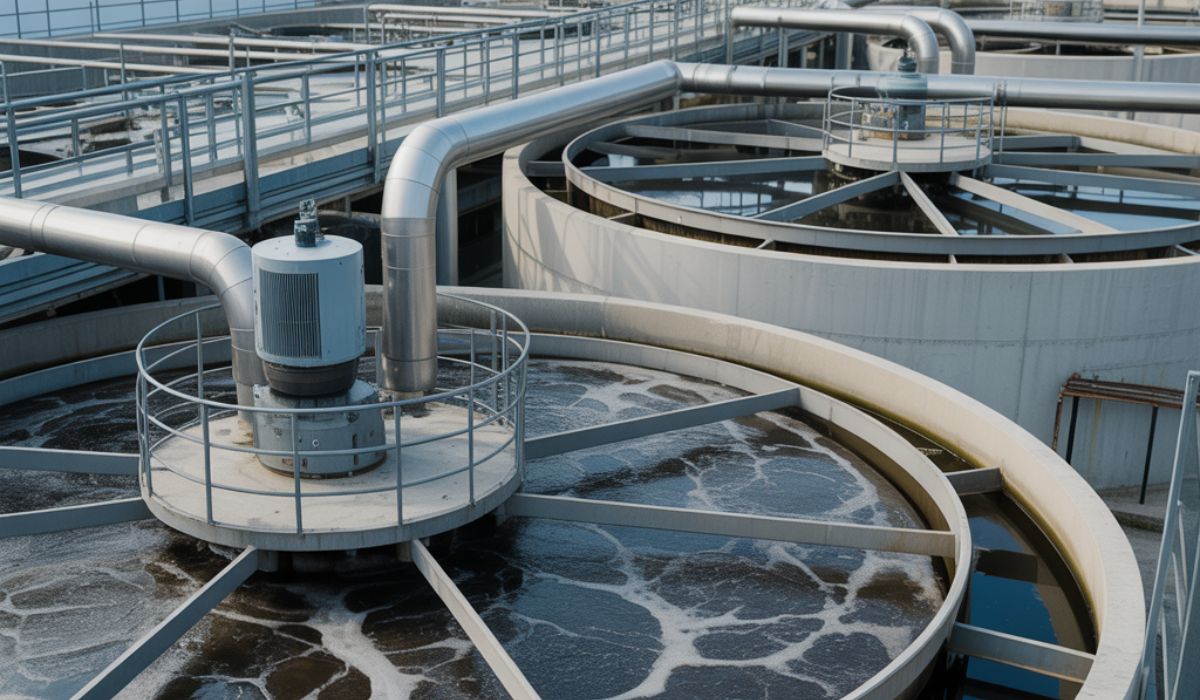
A sewage treatment plant is an engineered system that treats domestic and industrial sewage to meet environmental discharge or reuse standards. The system removes pollutants while ensuring regulatory compliance, odour control, and operational reliability.
Industries and commercial facilities use STPs to:
- Meet CPCB and SPCB discharge norms
- Safely discharge or reuse treated water
- Reduce environmental and legal risks
- Control long-term wastewater management costs
Working Process of a Sewage Treatment Plant
A sewage treatment plant works through multiple treatment stages. Each stage performs a specific function to achieve effective sewage treatment.
Preliminary Treatment
This stage removes large solids such as plastics, rags, and grit through screening and grit removal units. These components protect downstream equipment and prevent mechanical damage.
Primary Treatment
In this stage, sewage flows into settling tanks. Heavy suspended solids settle at the bottom, while oil and grease separate at the surface. This process reduces the organic and solid load on the biological treatment system.
Secondary (Biological) Treatment
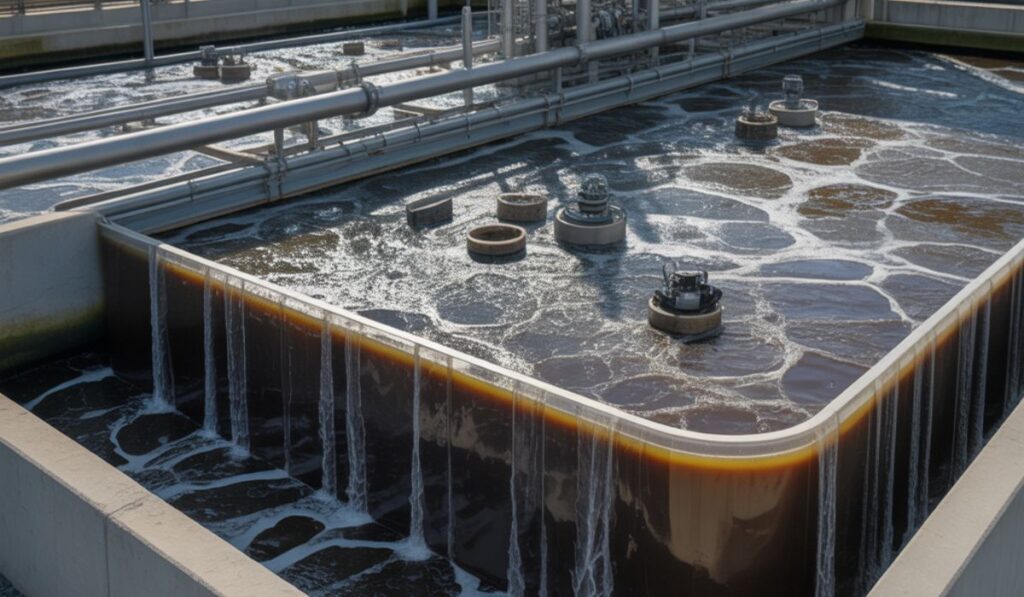
This stage forms the core of sewage treatment. Microorganisms break down organic pollutants and significantly reduce BOD and COD levels.
Industries commonly use:
- MBBR (Moving Bed Bio Reactor)
- SBR (Sequencing Batch Reactor)
The sewage load, flow variation, and operating conditions determine the suitable technology.
Secondary Clarification
Clarifiers separate treated water from biological sludge. Clear water moves to further treatment or discharge, while excess sludge goes to sludge handling systems.
Tertiary Treatment (If Required)
Facilities that require higher water quality or reuse apply tertiary treatment. This stage may include:
- Pressure sand filtration
- Activated carbon filtration
- Disinfection using chlorine or UV systems
Industries often use tertiary treatment for reuse applications.
Types of Sewage Treatment Plants
MBBR Based STP
MBBR systems use bio-media to support microbial growth.
- Continuous operation
- Compact design
- Suitable for industrial and commercial facilities
SBR Based STP
SBR systems treat sewage in controlled batch cycles.
- High treatment efficiency
- Strong control over variable loads
- Suitable for high-strength sewage
Compact / Modular STP
Compact STPs suit locations with limited space.
- Pre-engineered and modular design
- Commonly used in hotels, hospitals, and commercial complexes
- Faster installation compared to conventional systems
Practical Considerations in Industrial STP Design
Industrial sewage rarely matches theoretical design assumptions. Facilities often experience fluctuating flows, higher organic loads, chemical carryover, and inconsistent operation.
STPs commonly fail because facilities:
- Undersize biological treatment systems
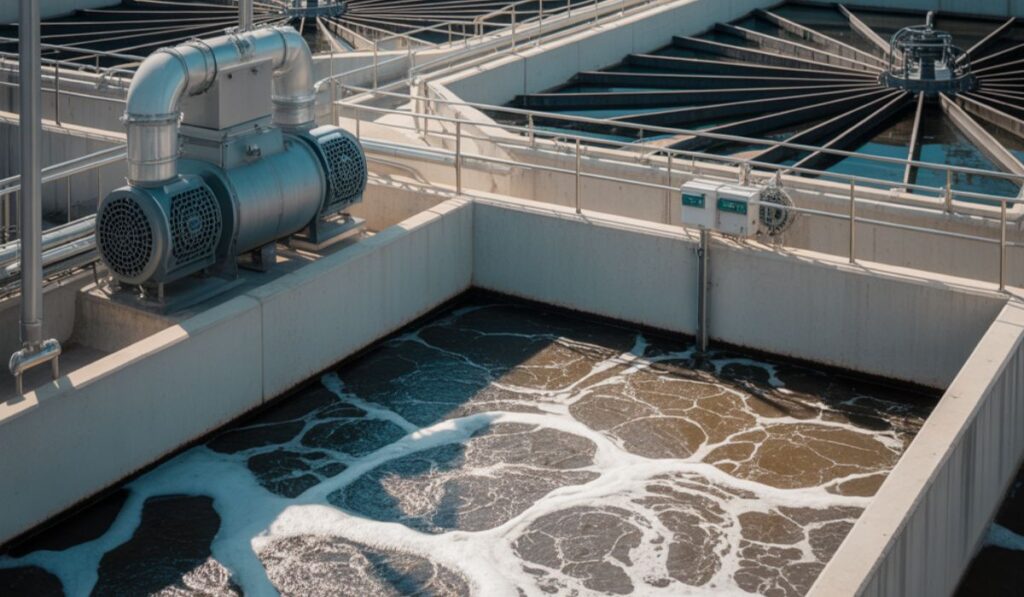
- Design incorrect aeration systems
- Ignore sludge handling and disposal
- Plan only for current capacity and not future expansion
Successful STP design focuses on actual operating conditions, not theoretical calculations.
Industrial & Commercial Applications of STP
Industries and commercial facilities across sectors use sewage treatment plants, including:
- Manufacturing industries
- Pharmaceutical units
- Food processing plants
- Hotels and resorts
- Hospitals and healthcare facilities
- Commercial buildings and IT parks
Each application produces different sewage characteristics. Engineers must customize STP design to suit the specific application.
Why STP Plays a Critical Role in Compliance
Pollution Control Boards treat untreated or partially treated sewage as a serious violation. Auditors review treated water quality, performance records, and sludge handling practices during consent renewals.
A properly designed and operated sewage treatment plant helps facilities:
- Secure Consent to Operate approvals
- Clear environmental audits
- Maintain uninterrupted operations
- Avoid penalties and shutdown notices
Common Mistakes in STP Planning
Facilities often repeat these mistakes:
- Underestimating treatment capacity
- Selecting unsuitable treatment technology
- Using poor automation and monitoring systems
- Ignoring sludge management
- Skipping long-term maintenance planning
An STP requires capital investment, but lifecycle performance defines its true value.
Frequently Asked Questions (FAQs)
1. Do industries and commercial buildings need a sewage treatment plant?
Yes. Pollution Control Boards require industries and many commercial facilities to treat sewage before discharge or reuse. An STP supports consent approvals and compliance with CPCB and SPCB norms.
2. How does an industrial sewage treatment plant differ from a residential STP?
Industrial STPs handle higher and fluctuating sewage loads, chemical contamination risks, and strict compliance requirements. Residential STPs manage consistent domestic sewage under simpler conditions.
3. Which sewage treatment technology works better: MBBR or SBR?
Both technologies work effectively in different conditions. MBBR suits continuous operations with limited space, while SBR provides better control for variable or high-strength sewage. Engineers select technology based on sewage characteristics and operational needs.
4. How do engineers decide the capacity of a sewage treatment plant?
Engineers calculate STP capacity based on daily sewage generation, peak load variation, manpower or occupancy, and future expansion plans. Incorrect capacity estimation causes most STP failures.
5. Can industries reuse treated water from a sewage treatment plant?
Yes. With proper tertiary treatment, industries reuse treated water for gardening, cooling towers, flushing, and other non-potable uses. Reuse reduces freshwater consumption and operating costs.
6. What problems occur when an STP fails to meet discharge standards?
Non-compliant STP performance triggers penalties, consent renewal delays, audit objections, and possible operational shutdowns. Regular monitoring and proper operation prevent these issues.
7. Why does sludge management matter in a sewage treatment plant?
Sludge management plays a critical role in STP performance. Poor sludge handling causes system failures, odour issues, and compliance problems. Proper dewatering and disposal ensure stable operation.
Conclusion
A sewage treatment plant does more than meet environmental requirements. For industrial and commercial facilities, it functions as a core process system that protects compliance, ensures operational stability, and controls long-term costs.
Facilities that treat STP planning as a technical and regulatory system avoid future risks, penalties, and operational disruptions.
For more information about the sewage treatment visit – Weltreat